
Active Warrants in Chippewa County
A warrant starts with a judge or a magistrate. The court reviews a sworn request from police or the prosecutor. If the facts show probable cause, the judge signs the order. In the county, both the 91st District Court and the 50th Circuit Court can issue warrants. The district court handles most misdemeanor and traffic matters. The circuit court handles felony cases. Once signed, a warrant is sent to law enforcement to act on.
Here is the key fact for anyone searching. Chippewa County does not publish a public countywide warrant list. There is no online lookup that lets you type a name and pull an active warrant. The sheriff's office keeps warrant work in-house, and it staffs a warrant officer among its duties. For a status answer, you contact the office that holds the warrant, not a web portal. That means the sheriff's office for arrest warrants and the district court for bench warrants.
This may feel like a gap, but it is normal for a small county. Warrant handling is active law-enforcement business across Chippewa County. A public list could tip off a person before an arrest is made. So the county steers people to the right phone line instead. The fallback chain below is the real path in Chippewa County, and it works. Start with the sheriff, add the court, and use the statewide tools only for the narrow categories they cover.
Note: A warrant can stay active for years, so an old missed date or unpaid matter may still be open long after you last heard about it.
How to Check for a Warrant in Chippewa County
Because there is no public database, checking a warrant means working a short list of offices. The order matters. Each office holds a different piece, and the sheriff is almost always the right first call. The steps below walk the full fallback chain for the county, from the sheriff's warrant officer to the courts and the statewide systems.
- Call the Chippewa County Sheriff's Office at 906-635-6355 and ask the warrant officer whether a name has an active arrest warrant.
- For a missed court date, contact the 91st District Court at 906-635-6320 and ask about a bench warrant on the case.
- For a felony matter, ask the county clerk or the 50th Circuit Court whether a capias or arrest warrant was issued in the file.
- Use Central Dispatch at 906-495-3312 for non-emergency questions when the sheriff's office is closed.
- Check the statewide tools last, since they only cover state-supervised offenders and registered sex offenders, not local warrants.
Central Dispatch runs the county's non-emergency line and routes calls to the right responder. You can see how the county frames that role on the county Central Dispatch page.
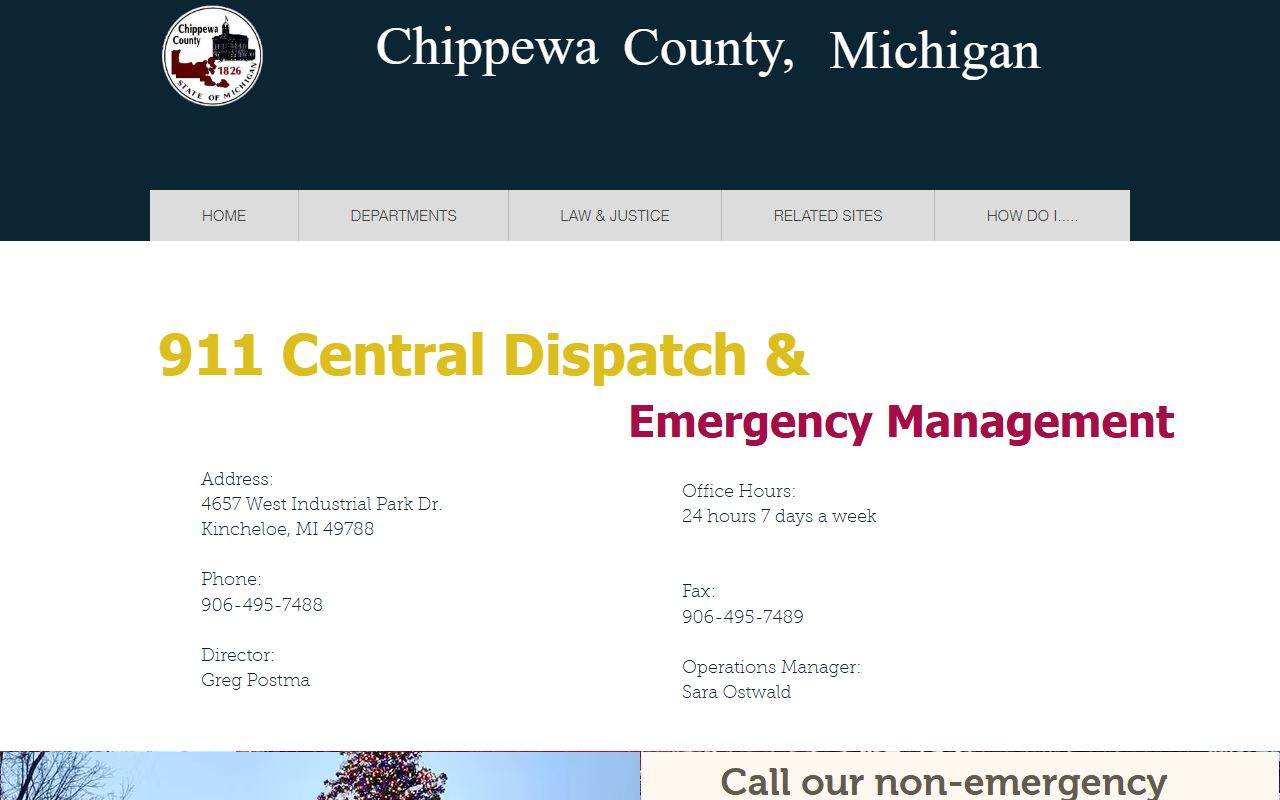
That dispatch line is a backup, not the main path. For a warrant answer you still want the sheriff's warrant officer or the court clerk during business hours. Have a full name and a date of birth ready before you call, since staff need both to pull the right person.
Types of Warrants in Chippewa County
Not every warrant works the same way. The name on the order tells you where it came from and who to call. Some warrants come from a fresh criminal charge. Others come from something you did or missed inside an open case. The main types you will run into across the county are set out below.
- Arrest warrant
- A judge signs this when police or the prosecutor show probable cause that a person committed a crime. It authorizes an arrest anywhere in the state.
- Bench warrant
- A court issues this when a person misses a hearing or ignores a court order. It is common in district court traffic and misdemeanor cases.
- Search warrant
- This order lets police search a named place for named items. It targets property and evidence, not a person's arrest.
- Capias or failure to appear
- A capias is a pickup order tied to an open case, often for a missed appearance or unpaid obligation the court set.
Bench warrants are the type most Chippewa County residents meet. A forgotten traffic date is enough to trigger one. The good news is that a bench warrant is often the easiest to clear, since it usually turns on getting back on the court's calendar. The sheriff's warrant officer can tell you if an arrest warrant is active, while the district court clerk is the right contact for a bench warrant on a specific case.
What a Chippewa County Warrant Record Shows
When an office confirms a warrant, the underlying record holds a set of standard fields. You may not see all of them over the phone, but the file keeps each one. Knowing the fields helps you ask the right question and give staff the details they need. The inventory below reflects the kind of data a Chippewa County warrant record carries.
| Field | What It Shows |
|---|---|
| Subject Name | The full legal name of the person the warrant names, sometimes with known aliases. |
| Warrant Type | Whether the order is an arrest, bench, search, or capias warrant. |
| Issuing Court | The court that signed the order, usually the 91st District Court or the 50th Circuit Court. |
| Charge | The offense or reason behind the warrant, such as a misdemeanor count or a missed appearance. |
| Bond Amount | The amount set for release, when the court has attached one to the warrant. |
| Date Issued | The date the judge or magistrate signed the order. |
| Status | Whether the warrant is active, served, recalled, or cleared. |
Bond amounts follow the county's usual rules. A judge or magistrate sets the figure, and some minor offenses carry a standard bond. The county takes bond as cash or through a bail bondsman, and it does not accept checks or foreign currency. Anyone tracking a charge alongside a warrant can dig deeper through the county criminal court records for the full case file.
Warrants and Chippewa County Tether Rules
An active warrant does more than risk an arrest. It can block release programs that many people want. The sheriff's office runs GPS tether and work release for qualifying inmates. Both programs let a person serve time with more freedom. But the rules are strict, and a warrant is a hard stop.
The county's own program page spells this out. A person must not have any warrant for arrest to qualify for GPS tether or work release. That single line shows how much a warrant matters to your options. You can read the qualifications on the county sheriff tether page.
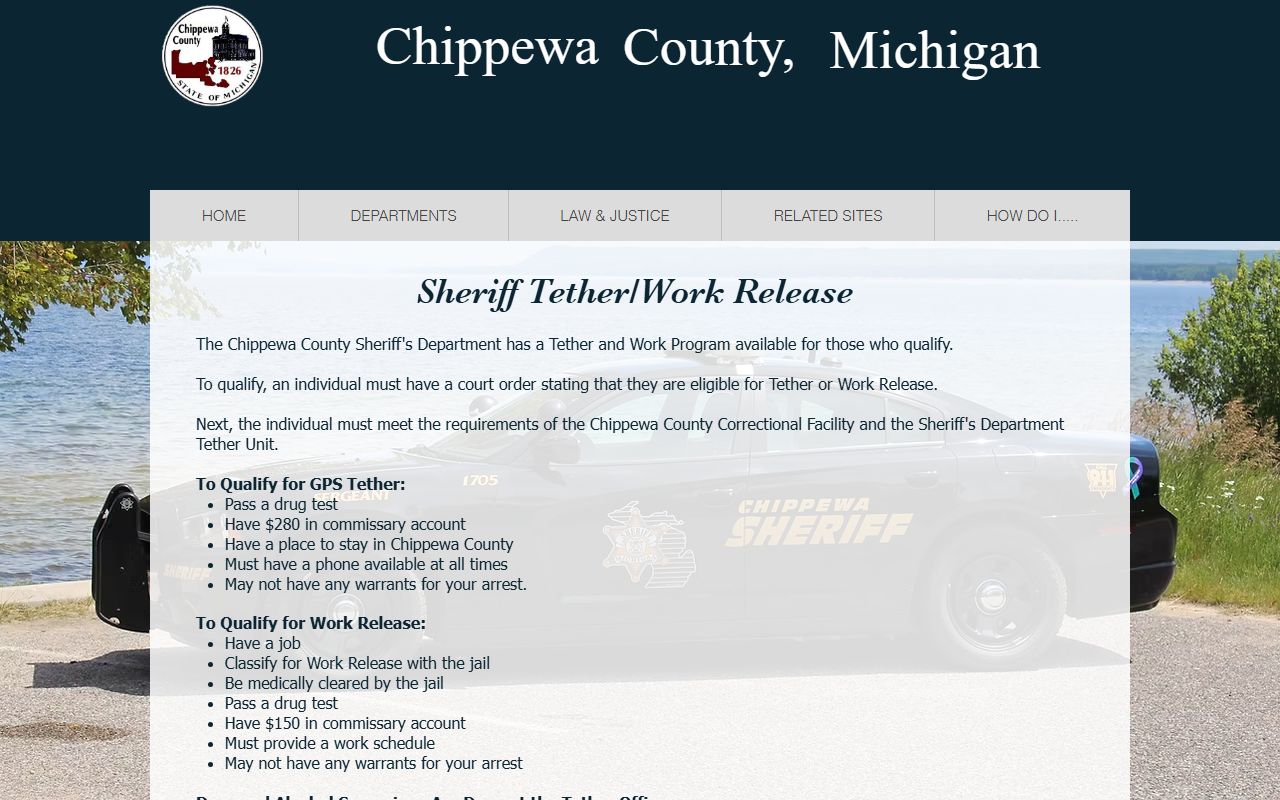
So clearing a warrant is not just about avoiding jail. It can open the door to tether, work release, and other supervised options. It can also affect bail terms and whether a judge trusts you to appear. That is one more reason to handle a warrant early rather than wait.
Heads up: An open warrant can disqualify you from GPS tether and work release, so resolving it early may protect your release options later.
What to Do If You Have an Outstanding Warrant
Finding out you have a warrant is stressful, but the worst move is to ignore it. A warrant does not expire on its own. It can surface at a traffic stop, a job check, or a border crossing at the worst time. Acting first puts you in a better spot than being picked up by surprise. Chippewa County offers a clear path, and it starts with getting the facts.
Begin by confirming the warrant with the sheriff's office or the court that issued it. Ask the type, the charge, and any bond amount. Then talk to a lawyer before you take further steps. An attorney can often arrange a surrender on your terms, ask the court to recall a bench warrant, or line up bond. For a bench warrant on a traffic or misdemeanor case, the district court may be able to set a new date and lift the order.
Bring what you need when you resolve it. Cash bond or a bail bondsman is the county's accepted route, since checks and foreign currency are not taken. If you may end up in custody, plan for it. You can review the county inmate records process to understand booking, bond, and how to reach the jail.
Important: Talk to a lawyer before you turn yourself in, since counsel can arrange bond, timing, and a possible warrant recall in your favor.
The Chippewa County Sheriff App
The Chippewa County sheriff's office runs an official mobile app, listed on the App Store and Google Play. It is built as a public-safety and outreach tool for the county. Through the app, residents can send tips, view road and weather closures, and use an app-only offender search. It is a handy channel, but it is not a warrant database. Treat it as a way to reach the office and stay informed, not as a place to confirm a warrant.
The offender search inside the app is app-only, which means you will not find that same lookup on the county website. Even so, it does not replace a call to the warrant officer for warrant status. For a warrant answer, the phone remains the reliable route. The app is best used to submit a tip, follow road conditions, or reach the sheriff's office quickly.
Note: The sheriff app offers tips, an app-only offender search, and road and weather updates, but it is not a jail roster or a warrant list.
Chippewa County Sheriff's Office
The sheriff's office is the anchor for warrant questions in Chippewa County. It is led by Sheriff Mike Bitnar and Undersheriff Ryan Hering, and it houses the warrant officer who tracks active arrest warrants. The office and the jail sit at the same Court Street complex in Sault Ste. Marie. Use the office line during business hours, and the jail or dispatch line at other times.
Chippewa County Sheriff's Office
325 Court Street
Sault Ste. Marie, MI 49783
906-635-6355
Mon to Fri, 8:30 a.m. to 4:30 p.m.
Corrections and Central Dispatch
Jail booking office
Sault Ste. Marie, MI 49783
906-635-7620
Dispatch (non-emergency): 906-495-3312
You can find current staff and duties on the county sheriff's office page. The jail booking office is staffed around the clock and can answer bail and arraignment questions, which is useful if a warrant leads to custody.
Public Access to Chippewa County Warrant Data
Warrants live in the wider world of public records, but access has limits. Michigan's Freedom of Information Act governs many Chippewa County records, yet it carves out real exemptions. Law enforcement can withhold information that would harm an active investigation or a pending arrest. That is a big reason an open warrant is not posted for anyone to browse.
The exemption rules sit in the state statute itself. The relevant section lists the categories a public body may hold back, including certain law-enforcement material. You can read the exemption language on the MCL 15.243 statute page.
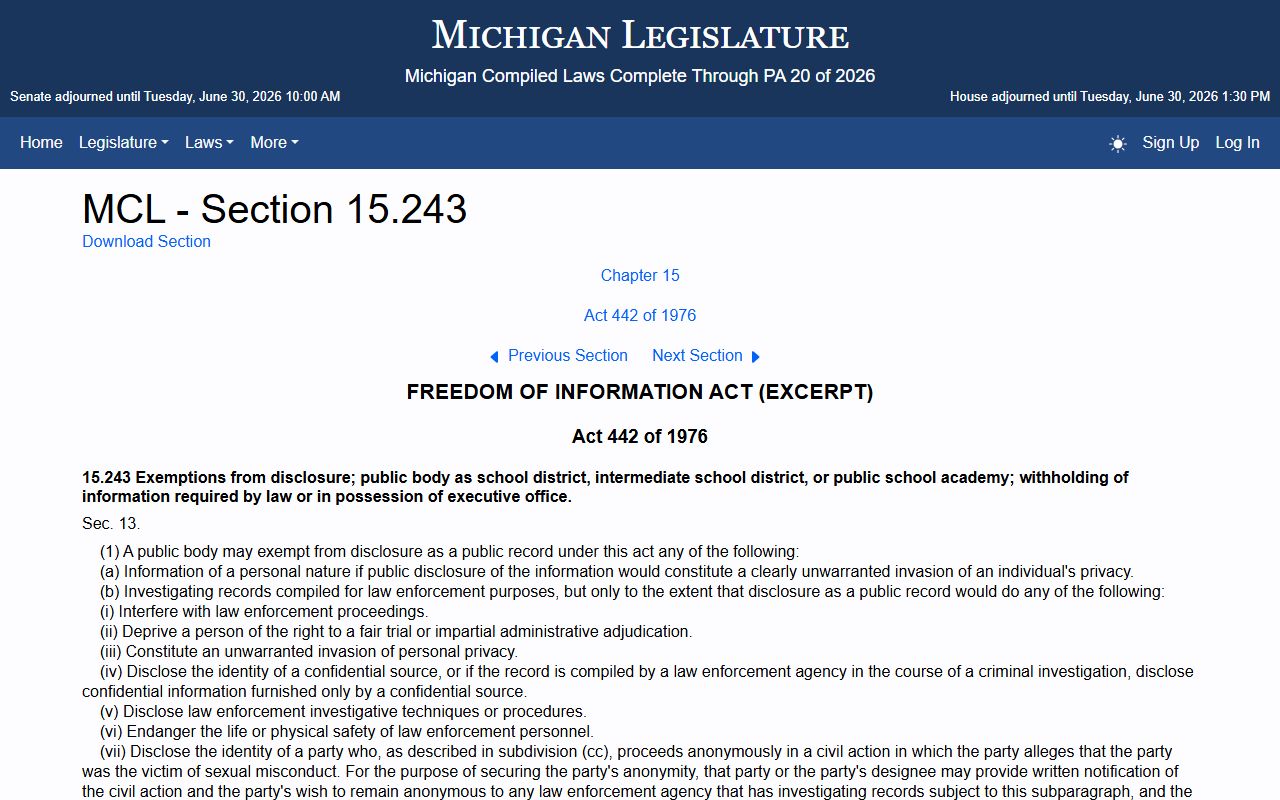
So a records request can reach some warrant history, but not always an active order. Once a warrant is served and a case is public, the court file shows far more. Court records themselves follow the Michigan Court Rules, not ordinary FOIA, so the clerk and the court are the better source for filed case documents.
Restricted Chippewa County Warrant Records
Some warrant and case information stays sealed no matter how you ask. The law shields these files for privacy or fairness reasons. Knowing which records are closed saves you a wasted request. A few clear categories fall outside public reach in the county and the state.
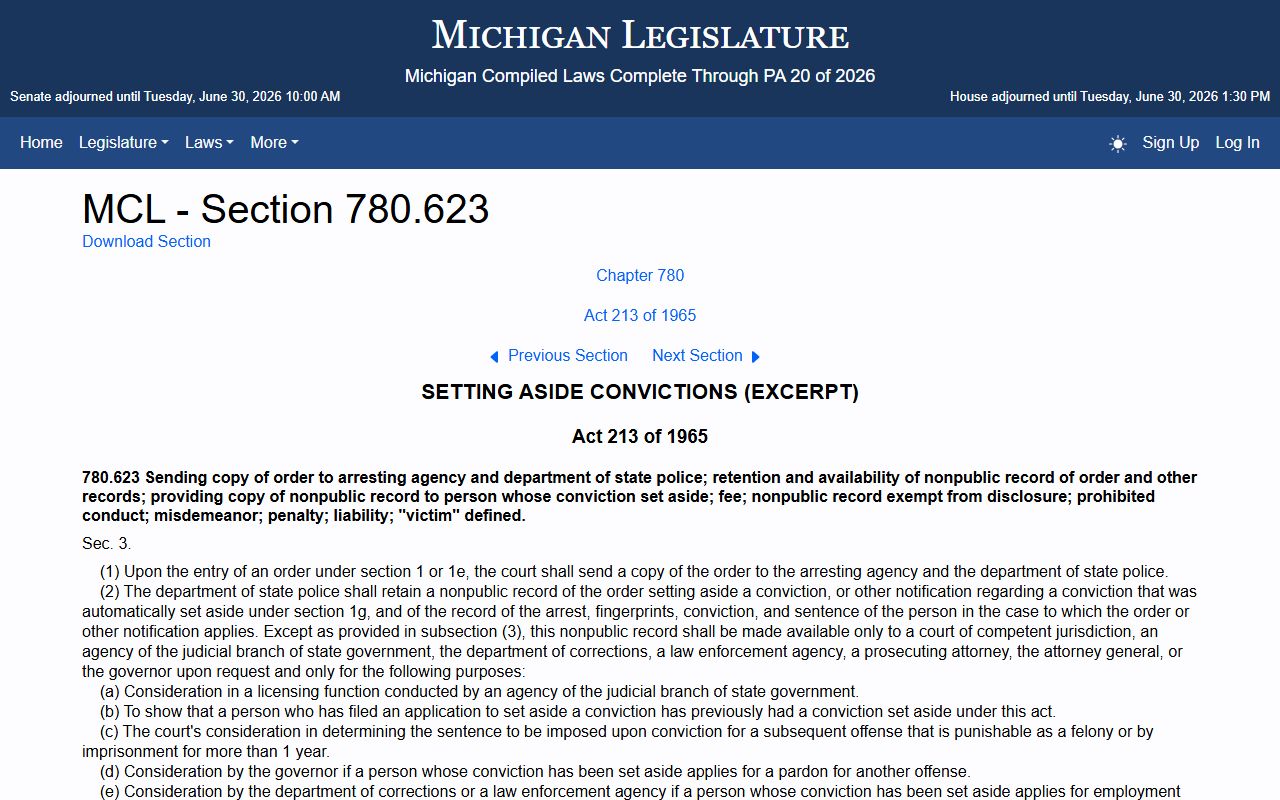
Set-aside and nonpublic records are one such category. When a court sets aside a conviction, the tied records become nonpublic and drop out of general access. You can review that framework on the MCL 780.623 statute page.
Juvenile warrants and cases are also restricted. The court keeps juvenile files, and access is limited or opened only by court order. Federal warrants are a separate world too, handled by the federal courts and agencies, not the county. For those, the county is a boundary marker, not the custodian.
Statewide Tools Beyond Chippewa County
When a name reaches past Chippewa County, two state systems can help. Neither is a warrant search, but each covers a slice that a local call may miss. Use them after the county sheriff and the courts, and only for what they actually track. Both are run by the state, not the county.
- Michigan OTIS lists state prisoners, parolees, and probationers under Department of Corrections supervision.
- The Michigan Public Sex Offender Registry lets you look up registered offenders statewide.
- Neither tool shows local jail-only holds or open county warrants, so pair them with a sheriff or court call.
These tools round out the picture, but they do not replace the fallback chain. For an active warrant in the county, the sheriff's warrant officer and the district court remain the real answer. Start local, confirm the type and status, and use the state systems only for the categories they truly cover.