
What Probate Covers in Chippewa County
Michigan runs three trial courts, and the 17th Probate Court is the one that handles estates and protective cases here. Its records date back to 1828, which makes probate the deepest file set the county keeps. The court directory lists a long roster of case types. These include decedent estates, small estates, guardianships and conservatorships for adults and children, mental illness petitions, wills, trusts, and name changes. The court also takes will deposits, safe-deposit-box applications, safe delivery of newborn matters, trust administration, and even condemnation and drain cases.
Probate is not a side desk. It is a full jurisdictional lane with its own register, clerk, forms, and deadlines. Appeals from probate rulings move to the Michigan Court of Appeals and then to the state Supreme Court. Court staff can point you to the right form and explain a filing step. They cannot give legal advice or tell you how a judge might rule. That line matters, and the Chippewa County court repeats it often, so plan to bring your questions answered or an attorney if the matter is complex.
Probate Terms Defined
Probate files use a small set of legal words again and again. A quick guide helps a first-time filer read a case correctly and ask for the right record. The terms below show up on estate, guardianship, and conservatorship pages throughout the county's probate system.
- Testator
- The person who made the will. When that person dies, the will is offered to the court for probate.
- Executor
- The person named in a will to carry it out. In Michigan practice this role is often called a personal representative.
- Intestate
- Dying without a valid will. State law then decides who inherits and who may serve.
- Guardianship
- A court order that puts one person in charge of the care of a minor, an incapacitated adult, or a developmentally disabled person.
- Conservatorship
- A court order that puts one person in charge of the money and property of a protected adult or minor.
- Letters of authority
- The court document that proves a personal representative, guardian, or conservator has the legal power to act.
Chippewa County Probate Case Types
The county keeps its probate lanes distinct, and that is a gift to anyone trying to find a file. A decedent estate is not the same as a guardianship. A conservatorship is not the same as a mental illness petition. Each lane starts with a different form set and lands on a different page. Sorting your matter into the right lane first is the fastest way to reach the right clerk in Chippewa County.
Guardianship cases protect a person. The guardianship page covers incapacitated adults, minors, and people with developmental disabilities. A guardian looks after the ward's care and well-being, not the ward's bank accounts. The county warns plainly that staff cannot give legal advice on these cases.
See the Chippewa County probate guardianship page.
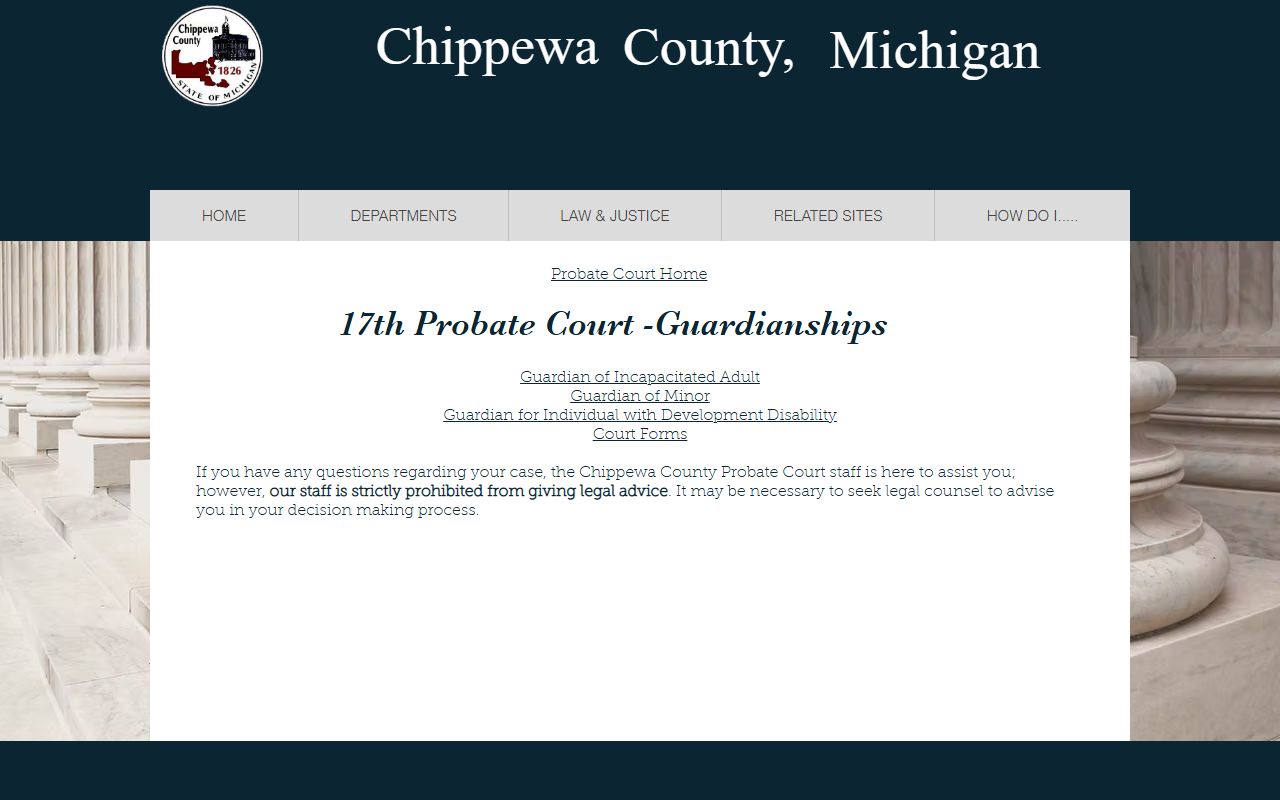
That page shows how guardianship of a minor differs from guardianship of an adult, which keeps the two tracks from blurring together.
Conservatorship cases protect money. The conservatorship page covers adults or minors who need someone to manage their property, with its own inventory page and new-conservator guidance. A person can need both a guardian and a conservator, but the court still treats them as separate duties.
View the Chippewa County probate conservatorship page.
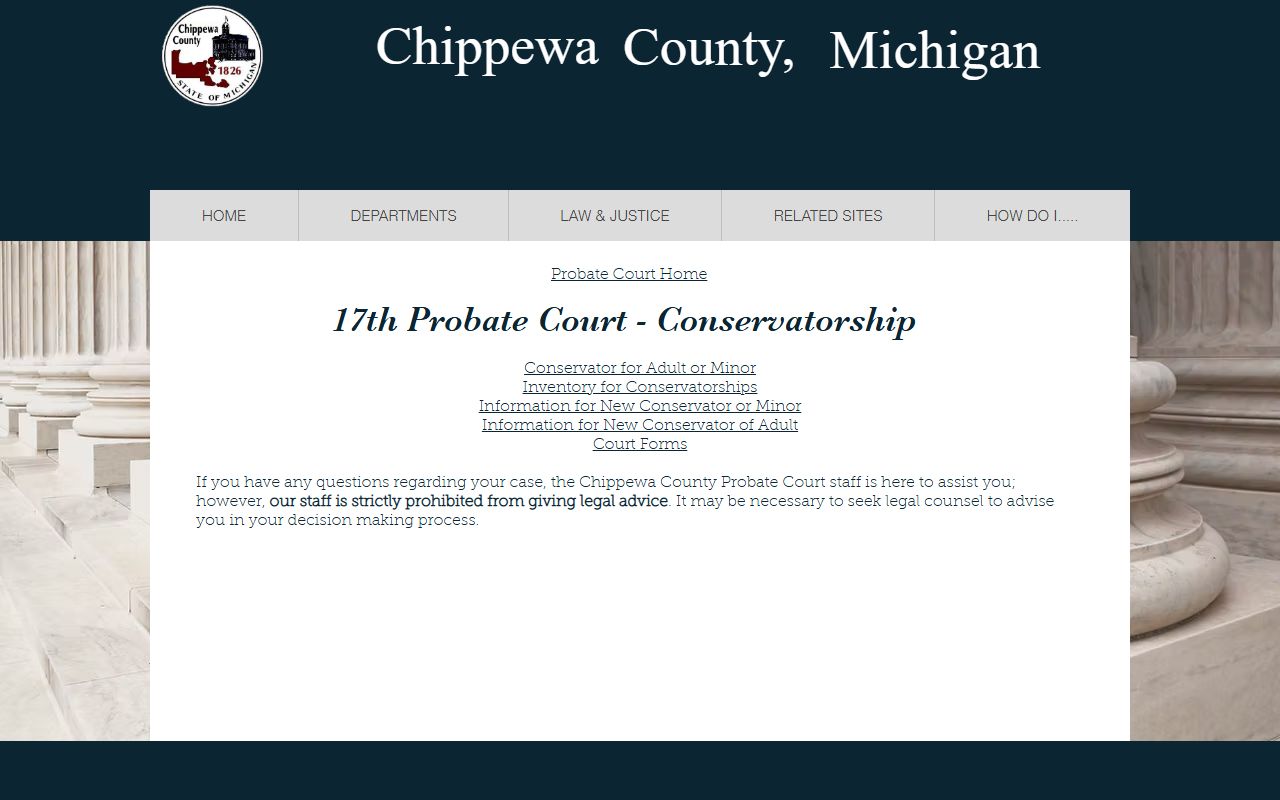
The conservatorship track ties straight into the inventory duty, since a conservator must account for the protected person's assets.
Mental illness petitions run in their own lane. The mental illness page tells a petitioner to contact Hiawatha Behavioral Health first. Filing is limited to residents of the county or people presently found here. This lane is sensitive, and the court guards access to the records tightly.
Read the Chippewa County probate mental illness page.
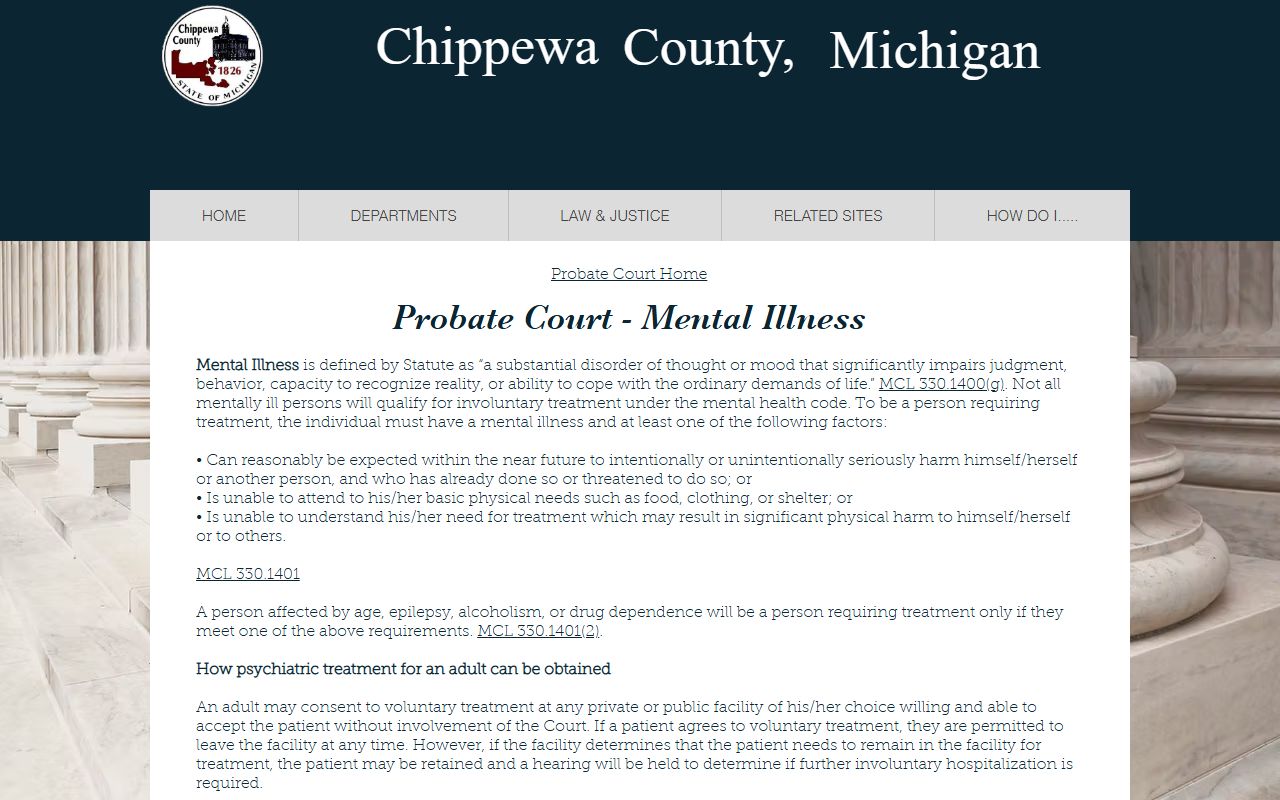
Because a health agency screens the matter first, this track starts outside the courthouse and only then reaches the probate clerk.
Wills and trusts form the fourth main lane. The wills and trusts page covers will deposits and trust administration. A person can deposit a will with the court for safekeeping during life, and that deposit becomes part of the record set the court holds. Name changes, safe-deposit-box applications, and other special filings round out the docket.
How to File Chippewa County Probate Records
A decedent estate can move down one of two roads, and the county pages show the split clearly. Unsupervised administration is filed by application to the register. Supervised administration is filed by petition to the court. The unsupervised road needs less court oversight and suits estates where heirs agree. The supervised road brings the judge into more of the steps. In both roads, the original will must be filed if the decedent left one, and the county repeats that rule so it is hard to miss.
Open the Chippewa County unsupervised administration page.
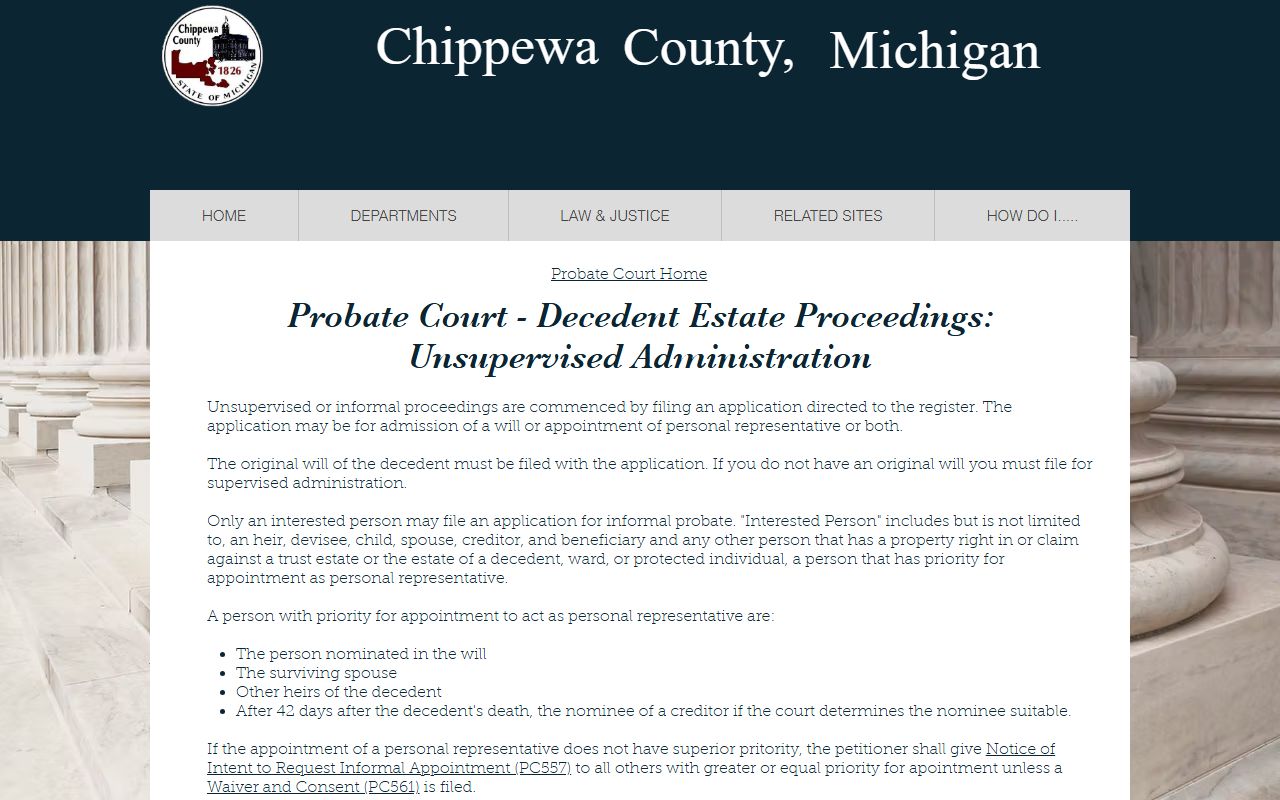
That page lists the forms an applicant files with the register, from the first application through the closing steps.
The supervised path uses many of the same forms but adds court petitions and hearings. Common numbered forms across both roads include PC 558, PC 559, PC 565, PC 566, PC 571, PC 572, PC 573, PC 574, PC 577, PC 587, PC 591, PC 592, PC 593, PC 595, PC 596, and PC 597. That is unusually detailed local guidance, and it points a filer to the exact document a step needs.
See the Chippewa County supervised administration page.
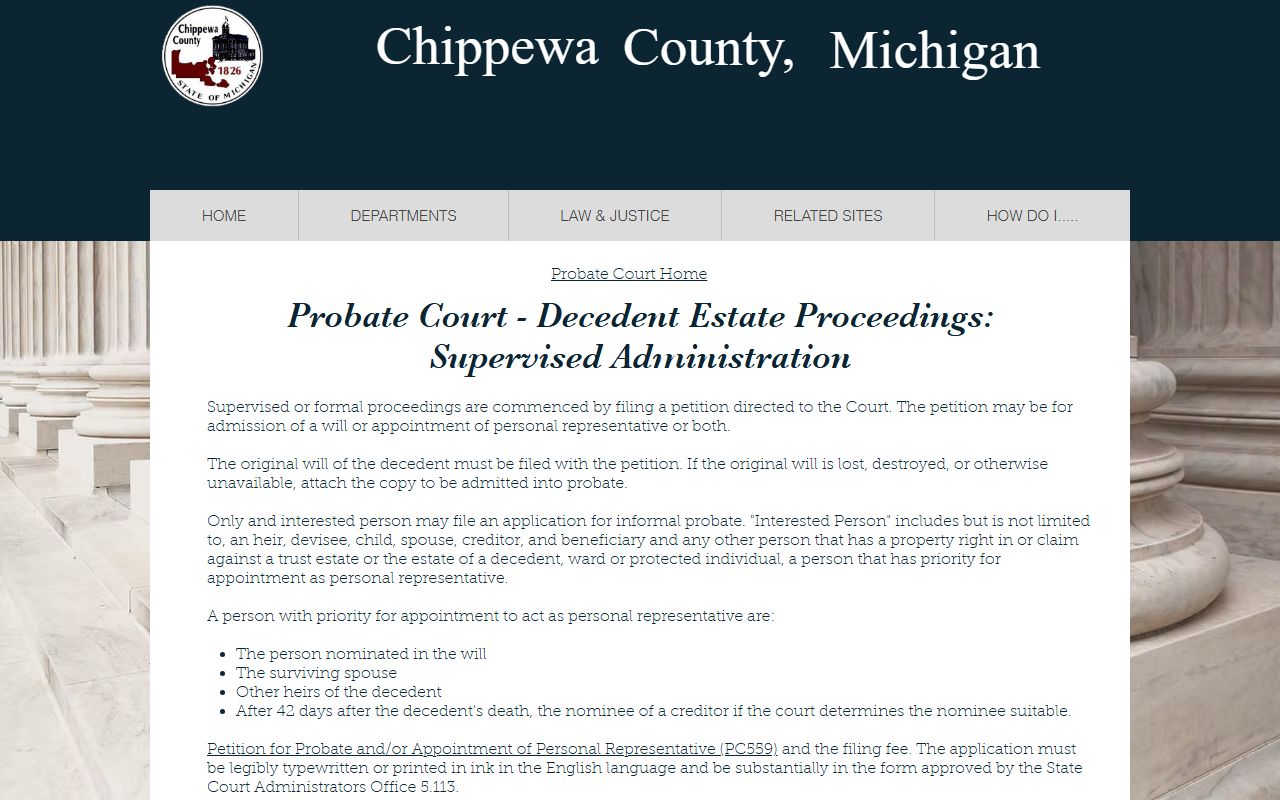
Reading that page next to the unsupervised page shows where the court steps in and where it steps back.
A simple order of operations keeps a new estate on track:
- Pin down the case type and pull the matching form set.
- Choose unsupervised administration by application, or supervised by petition.
- File the original will with the court if one exists.
- Pay the filing charges and the inventory fee that apply.
- File the inventory within the deadline for that case type.
Note: The probate register and clerk can explain which form fits a step, but they cannot tell you what to write in it or how a case will end.
Chippewa County Probate Inventory Deadlines
Chippewa County probate is deadline driven, and the inventory is where filers most often slip. An inventory is a full list of the assets in a case, valued at fair-market value, with supporting documents for the values. For a decedent estate, it lists everything the person owned at death, including real estate with street address and legal description, vehicles, and bank names. A conservatorship inventory follows a similar property-and-value pattern for the protected person. The two filings share a form but not a clock.
| Inventory form | Clock starts | Deadline |
|---|---|---|
| PC 577 Inventory (Decedent Estate) | Letters of authority issue | Within 91 days |
| PC 674 Inventory (Conservatorship) | Conservatorship letters issue | Within 56 days |
View the Chippewa County conservatorship inventory page.
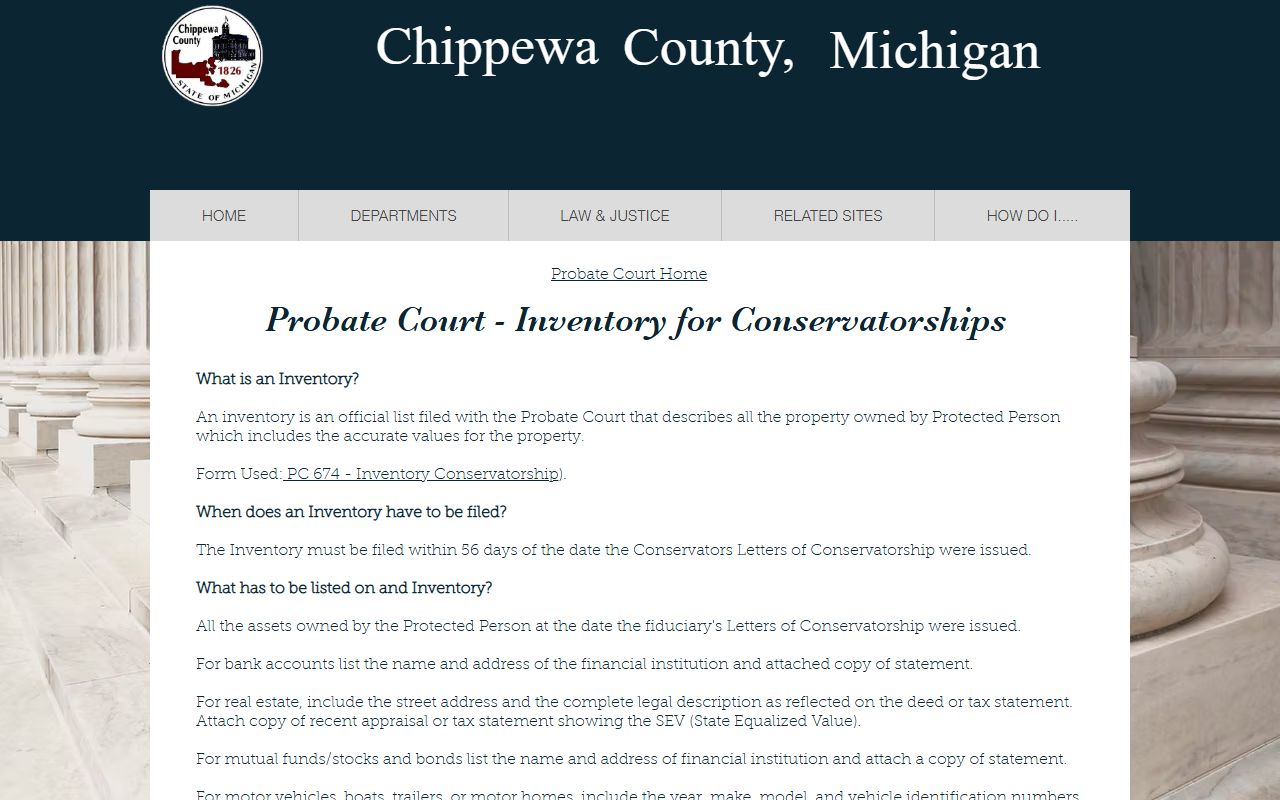
That page walks a new conservator through the inventory duty and the 56-day window that starts once letters issue.
Chippewa County Probate Court Contact
The 17th Probate Court sits in the county courthouse complex on Court Street in Sault Ste. Marie, on the garden level of the building. That is the counter for filings, will deposits, inventory questions, and record copies. Bring a case name or file number if you already have one, since probate files are keyed by case rather than by a single search box.
17th Probate Court
319 Court Street, Garden Level
Sault Ste. Marie, MI 49783
906-635-6314
Mon-Fri 8:00a-4:30p
Chippewa County Probate Filing Fees
Probate charges fall into two groups. The first is the flat copy fee for record pages. The second is the inventory fee, which is not flat at all. State law ties that fee to the value of the estate, so a larger estate pays a larger inventory fee. Payment goes to the Chippewa County probate court by cash, check, or money order. Certified copies and other services may carry their own charges, so confirm the current amount with the court before you file.
| Item | Amount |
|---|---|
| Photocopies, per page | $1.00 |
| Inventory fee | Based on estate value, set by state law |
| Accepted payment | Cash, check, or money order to the probate court |
Note: The inventory fee scales with estate value, so a filer should value the assets before estimating what the court will charge.
What Chippewa County Probate Files Hold
A Chippewa County probate file is more than a docket. It is a structured record of a legal duty. A decedent estate file can hold the original will, the application or petition that opened the case, the letters of authority, the inventory, accountings, and the final order that closes the estate. A guardianship or conservatorship file holds the petition, the order that names the fiduciary, the inventory of assets in a conservatorship, and the reports the fiduciary must file over time.
Because the inventory lists real estate, vehicles, and account holders, a probate file often doubles as a property map for a person's affairs. Many estate and guardianship files are open for public inspection, which is why heirs, creditors, and researchers request them. Genealogists lean on the older Chippewa County files, since the record set stretches back to 1828. For circuit civil or criminal matters, the county's broader court records process applies instead, since those files live with the clerk of the circuit court.
Restricted Chippewa County Probate Records
Not every Chippewa County probate matter is open. Mental illness petitions are the most guarded, and access is limited by both statute and court practice. Guardianship and conservatorship files that involve minors carry extra sensitivity, and juvenile-adjacent records are especially protected. Under Michigan law the court keeps juvenile records and opens them only by court order, so a public request may be turned away. When a case touches a child or a mental health matter, expect the counter to check who you are and why you need the file.
Two rules shape almost every probate visit. First, the original will must be filed whenever a decedent left one, so a family holding a will should not sit on it. Second, staff cannot give legal advice. They can hand you the right form and explain a step, but the choices in a case are yours or your attorney's. Name changes filed in probate are separate from the divorce files that run through the county's marriage and divorce records, which are court files held by the clerk. When a matter is complex, contested, or time-sensitive, professional help is often the safer path.
Chippewa County probate staff can point you to forms and process, but they cannot give legal advice or predict how a case will be decided.