
Finding a Chippewa County Inmate
The county does not post a simple online jail roster on its public pages. That surprises some people, but it is the honest picture. The sheriff office and the correctional facility work as separate but linked units, and both point users toward booking, phone, and service channels rather than a live search screen. The most reliable first step is a direct call to the jail. Booking staff can confirm whether a person is in custody, when they were booked, and what bond applies.
Two other channels help. The county runs an official sheriff mobile app that offers tips, offender searches, road closures, and weather information. That app is an outreach and public safety tool, not a court file system, and its offender search is app only. For people already sentenced to state prison or under state supervision, the Michigan Department of Corrections runs a separate statewide lookup. The county jail holds people awaiting trial or serving shorter local terms, so those state tools will not list every local detainee.
The sheriff office page names Sheriff Mike Bitnar and Undersheriff Ryan Hering and gives the office address in Sault Ste. Marie. You can review the office overview on the county site.
Custody information sits with the sheriff and jail. Criminal case files, charges, and hearing dates sit with the courts. Keeping those lanes separate keeps callers from reaching the wrong office. The Chippewa County Sheriff office page outlines the office structure and its main phone lines.
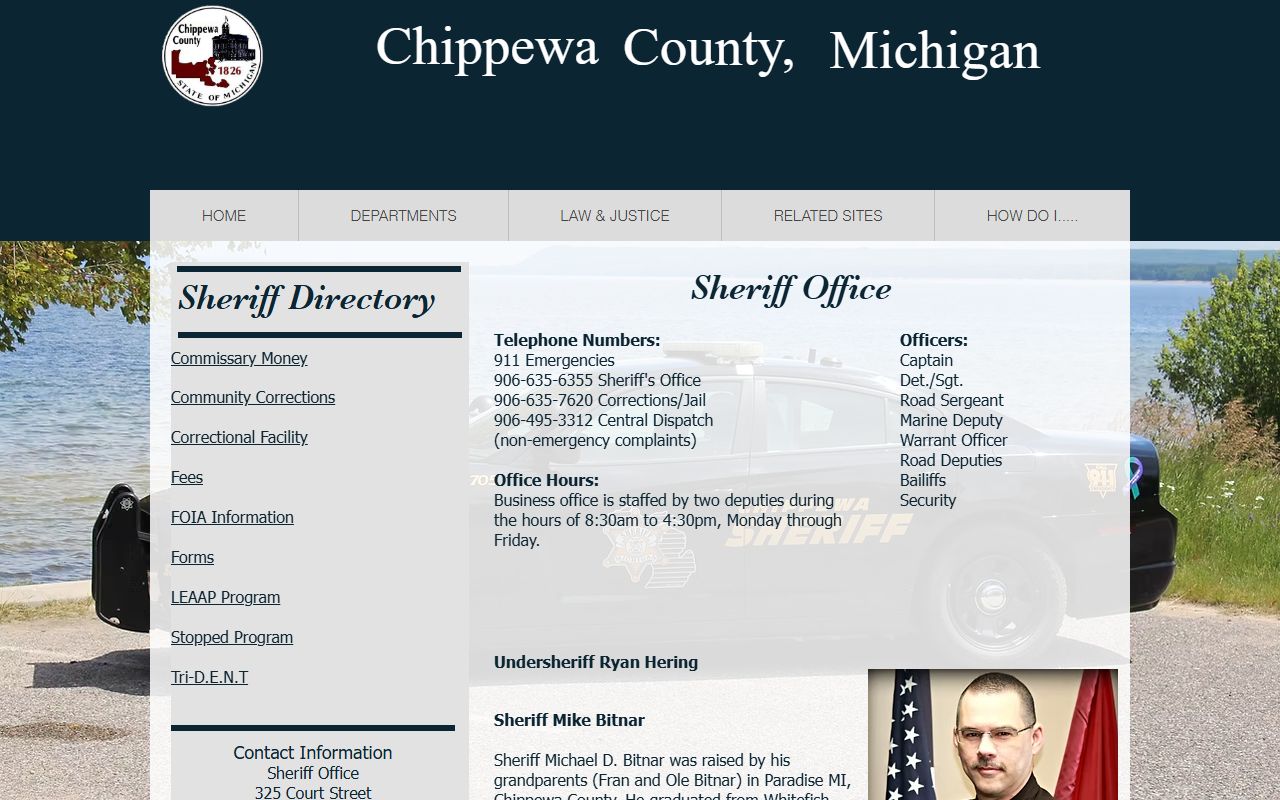
The office page frames custody as a service function, which is why bail, visitation, and deposit questions all route through the sheriff and jail rather than a records desk.
How to Locate a Chippewa County Inmate
Because the county leans on live channels, a short sequence works better than hunting for a portal. Start with the jail, confirm identity details, then branch to the app or a state tool if the person is not held locally. Have the full legal name and, if possible, a date of birth ready before you call.
- Call the correctional facility booking line and ask whether the person is currently in custody.
- Give the inmate's full legal name and date of birth so staff can match the record.
- Ask booking for custody status, booking date, charges, and the bond amount or type.
- Download the official sheriff app if you want the app only offender search and local alerts.
- Check the statewide OTIS system when the person may be a state prisoner, parolee, or probationer.
If the person cannot be found through any of these, the case may fall outside county custody entirely. Federal detainees, out of county holds, and immigration matters follow different agencies. Booking staff can often tell you which agency to try next.
Chippewa County Inmate Search Fields
Whether you call booking or use the statewide offender search, the same identifying details drive the lookup. Staff and databases match people on name, number, facility, and birth date. Supplying more than one field narrows results and cuts down on mismatches when several people share a common name.
| Field Label | Type | Required | Notes |
|---|---|---|---|
| Last and First Name | Text | Yes | Full legal name works best; aliases can help booking match a record. |
| Booking or Offender Number | Text | No | Fastest match if known; state prisoners carry an MDOC number in OTIS. |
| Facility | Select | No | Confirms whether the person is at the county jail or a state institution. |
| Date of Birth | Date | No | Separates people who share a name; often requested by booking staff. |
The county jail does not expose these fields on a public search page. They describe how booking staff and the statewide tools locate a person, so gathering the details in advance speeds every call.
What a Chippewa County Inmate Record Shows
A custody record answers the questions callers ask most: is the person here, why, and how do they get out. Booking builds that record at intake and updates it as the case moves. The fields below reflect what booking staff can share and what a state offender profile typically returns.
| Field | What It Shows |
|---|---|
| Booking Number | The unique intake identifier assigned when a person is booked into the county jail. |
| Booking Date | The date and time the person entered custody at the correctional facility. |
| Charges | The offenses tied to the current hold, which the courts formally process. |
| Bond Amount | The cash or bondsman amount required for release, set by a judge or magistrate. |
| Custody Status | Whether the person is held, released, on tether, or on work pass. |
| Housing or Facility | Where the person is held inside the jail or which institution holds them. |
Charges shown at booking are not the same as convictions. The formal case record, including pleas and sentencing, lives with the courts and can be traced through the Chippewa County criminal court records. Booking status can shift quickly, so verify anything time sensitive by phone.
Chippewa County Jail and Sheriff Contacts
Two offices handle custody in the county, and each answers a different question. The sheriff office is the administrative hub, with weekday business hours. The correctional facility is staffed around the clock, so bail and booking questions can be answered at any hour. Use the jail line for custody status and the sheriff office for general inquiries.
Chippewa County Sheriff Office
325 Court Street
Sault Ste. Marie, MI 49783
906-635-6355
Mon to Fri, 8:30 a.m. to 4:30 p.m.
Chippewa County Correctional Facility
Booking Office
Sault Ste. Marie, MI 49783
906-635-7620
Staffed 24 hours, 7 days a week
For non emergency complaints and dispatch support, the county also runs central dispatch at 906-495-3312. The jail page and the Chippewa County correctional facility page carry the current custody rules.
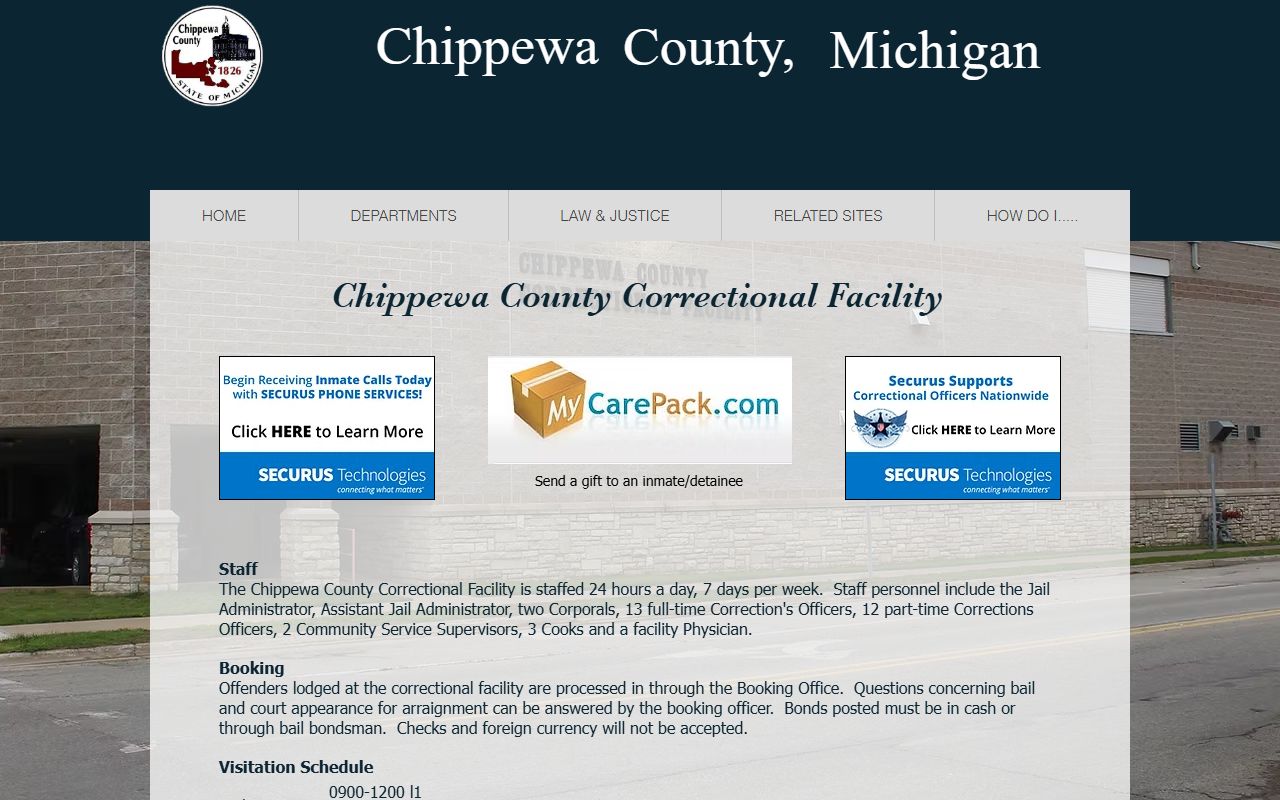
The correctional facility page reads like a service manual, covering who staffs the jail, how booking works, and what visitors and depositors need to know.
Chippewa County Jail Booking Process
Booking is the front door of the county jail. After an arrest, officers bring the person to the correctional facility, where staff record identity details, the charges, and any property. The facility is staffed at all hours, so intake can happen day or night. The booking office is also the point of contact for bail and arraignment questions, which is why callers are routed there rather than to a records clerk.
Bond rules at the jail are specific. The facility accepts cash or payment through a bail bondsman only. Checks and foreign currency are not accepted. A judge or magistrate sets the amount, and some minor offenses carry standard bonds. An active warrant can block release options such as GPS tether or work release, so warrant status matters at this stage. You can check that side of a case through the Chippewa County warrant records process.
Note: Bail and booking questions belong with the jail booking office, while hearing dates and case outcomes belong with the district or circuit court.
Statewide Michigan Inmate Tools
When the county jail does not hold the person you are looking for, statewide systems cover certain categories. These tools are run by the state, not the county, and each has firm limits. They will not fill the gap left by the missing county roster, but they answer specific questions the local jail cannot.
The Michigan Offender Tracking Information System, known as OTIS, lists people under state corrections supervision. That means prisoners, parolees, and probationers tied to the Department of Corrections. It does not list jail only offenders, people outside the supervision window, or records the law exempts. Review the search directly through the Michigan OTIS offender search.
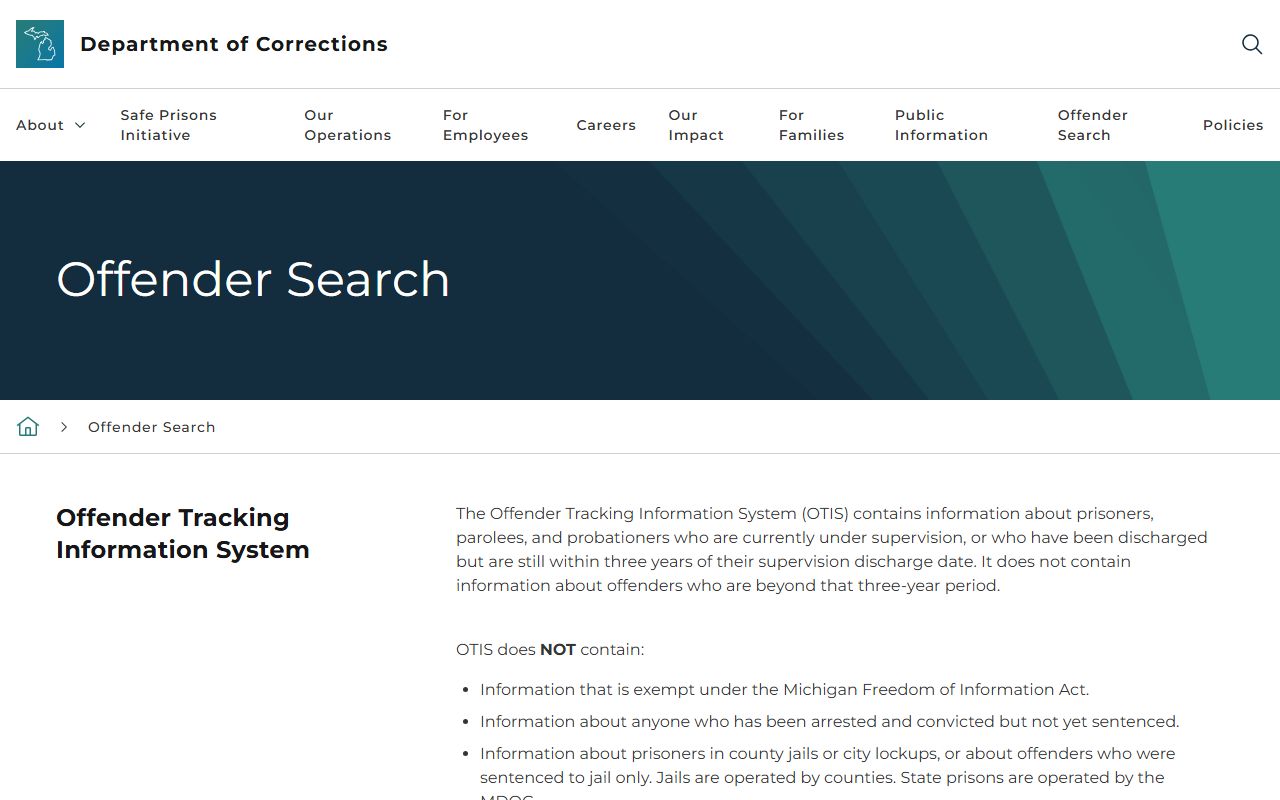
OTIS is the right tool for state prison and supervision status, but a person held only in the county jail will usually not appear there.
A second state resource covers a narrower category. The Michigan State Police maintain a public registry for people required to register as sex offenders. It answers registry questions, not custody status, and it is searchable by name and area. The Michigan Public Sex Offender Registry is the official source.
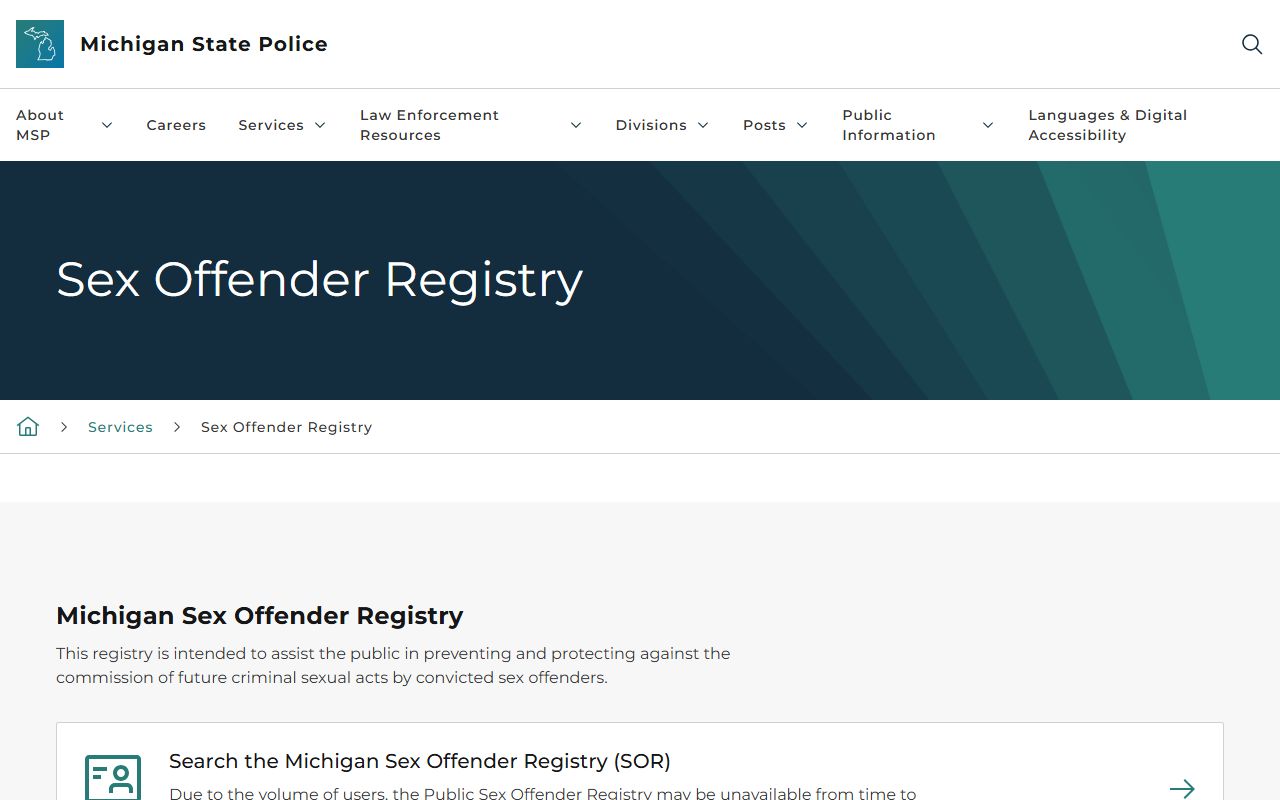
The registry serves a different purpose than a jail roster, so treat it as a public safety lookup rather than a way to confirm who is in custody today.
Chippewa County Jail Visitation
Visits at the county jail are non contact and run on a weekly schedule the facility controls. The correctional facility sets the days and times, and booking can confirm the current slots when you call. Visitors need to meet age and identification rules, and the jail can cancel or end a visit to keep the facility secure. The table below lays out the core rules the county publishes.
| Visit Detail | County Jail Rule |
|---|---|
| Visit Type | Non contact only; visitors and inmates are separated. |
| Schedule | Weekly schedule set by the facility; confirm days and times with booking. |
| Minimum Age | Visitors must be at least 17 years old. |
| Identification | Valid photo identification is required at every visit. |
| Restricted Items | Cameras, cell phones, and audio or video recorders are not allowed. |
| Conduct and Dress | Visitors must follow the facility conduct and clothing rules. |
Because the jail can adjust visiting hours on short notice, calling ahead is the safest way to avoid a wasted trip. Bring the required identification and plan to store restricted items before entering.
Money and Commissary at the County Jail
Inmate accounts fund commissary purchases and other approved needs. The county jail uses Access Corrections to handle deposits into an inmate account. Personal cash can also be deposited into an account while the person is in custody. Those funds let an inmate buy items from the commissary, since personal property is tightly limited during a stay.
Phone rules are their own category. The facility does not accept personal calls placed to inmates. Instead, calling runs through collect calls or telephone cards sold by the facility. That setup means outside contact usually depends on the inmate initiating a call under the jail rules rather than a family member phoning in.
Note: Deposit and phone rules can change with the vendor, so confirm the current process with the jail before sending money or planning a call.
Property, Phones, and Jail Programs
Personal property inside the county jail is narrow by design. The only personal items an inmate may keep are cash, prescription eyeglasses, and medical prescriptions approved by the facility physician. The jail issues clothing and meals, and inmates buy hygiene items and limited extra clothing through the commissary. That keeps intake simple and reduces contraband risk.
The correctional facility is more than a holding space. It runs programs that support release and rehabilitation, which makes the jail a supervised release hub for the county. Several options appear on the county pages.
- GED classes for inmates working toward a diploma.
- Drug and alcohol counseling.
- Bible study and Native American culture studies.
- Work pass and electronic tether for eligible participants.
- Community service placements.
Eligibility for tether and work pass depends on the case and on clean warrant status. Staff at the jail confirm who qualifies, since these programs move a person from a cell to supervised release in the community.
Juveniles and Chippewa County Custody
Not everyone taken into custody goes to the adult jail. Youth cases route through the family division of the circuit court, which handles delinquency for young people under 17 along with neglect, abuse, and related matters. That means a juvenile hold is a court and family division question, not a county jail roster search. Records in these cases are restricted by law and are not open to general public browsing.
The county juvenile court explains the family division framework and its forms.
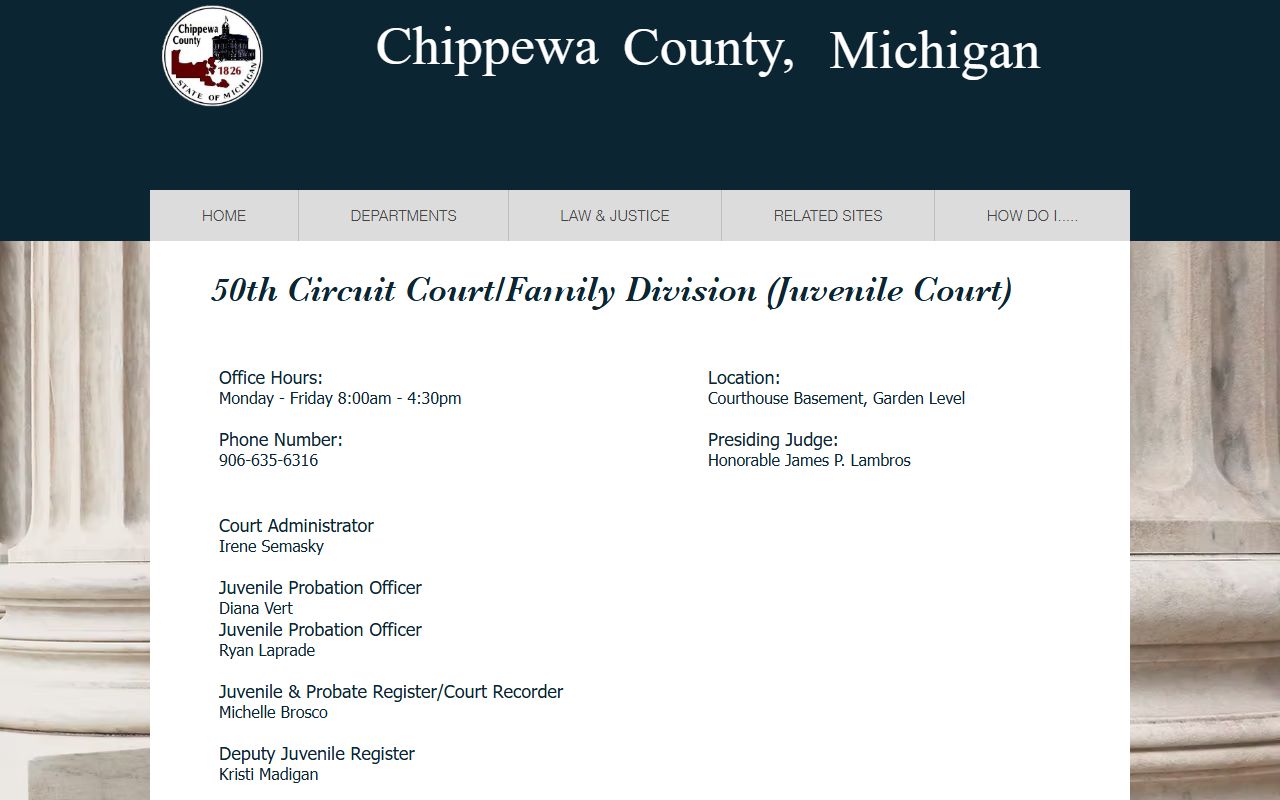
The Chippewa County juvenile court page covers jurisdiction, form sets, and the sensitive handling these cases require.
Custody also touches family obligations. A parent in the county jail may still owe child support, and those orders continue during a stay. The Friend of the Court routes state child support services through a MiLogin account, where users can view case information, payment summaries, and forms. Review it through the Chippewa County FOC MiChildSupport page.
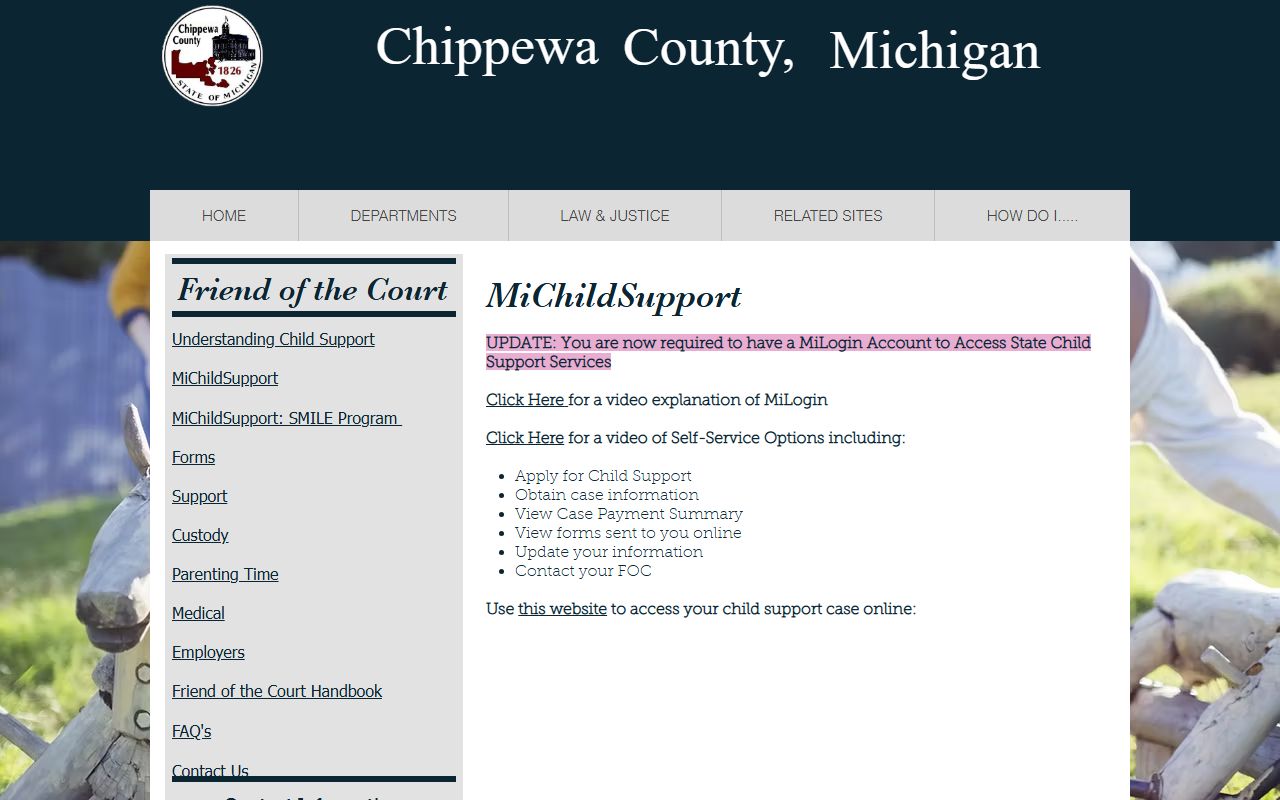
The MiChildSupport portal lets families track support case details even while a party is in custody, keeping the support lane separate from the jail lane.