
About the Chippewa County Clerk's Office
Steve Woodgate serves as the county clerk. The office lists deputy staff Shaun O'Neill, Liz Messer, and Laurie Wilson to help handle the daily counter work. The clerk is an elected county officer, and the role reaches well beyond a single court. In Chippewa County, the same clerk also acts as clerk of the 50th Circuit Court. That means felony, civil, and family files from the circuit court flow through this office rather than a separate court administration desk.
The office sits in the county building on Court Street in Sault Ste. Marie. Weekday hours run from 8:00 a.m. to 5:00 p.m. The clerk's genealogy service keeps a narrower window, so plan those visits with care. The county's clerk directory names the staff and lists the core duties in one place.
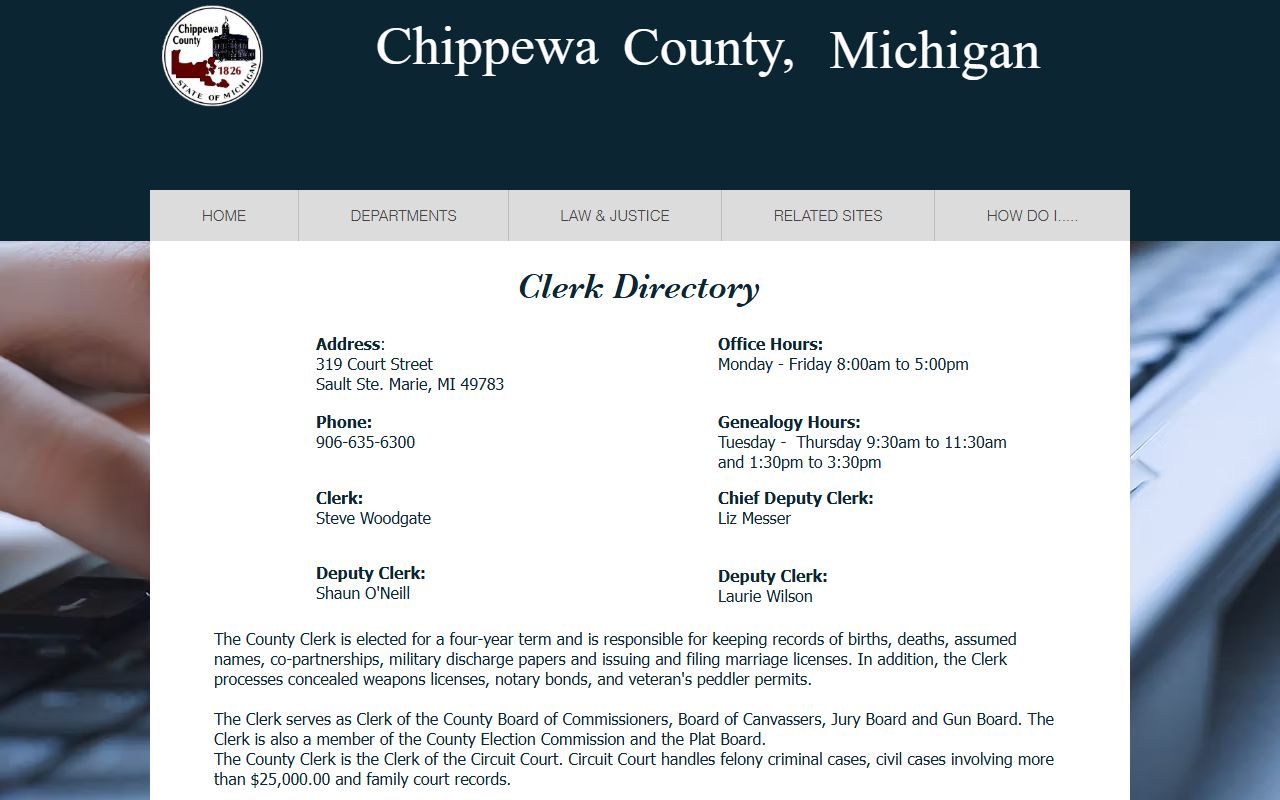
That directory is the quickest way to confirm who does what before you call. Use the contact card below when you are ready to reach the office directly.
Chippewa County Clerk of Court
Clerk: Steve Woodgate
319 Court Street
Sault Ste. Marie, MI 49783
906-635-6300
Mon to Fri, 8:00 a.m. to 5:00 p.m.
Genealogy: Tue to Thu, 9:30 to 11:30 a.m. and 1:30 to 3:30 p.m.
What the Chippewa County Clerk Handles
The clerk's job set is broader than many people expect. Yes, the office keeps court files. It also holds the county's vital records and several administrative filings that never touch a courtroom. The clerk records births, deaths, marriage licenses, assumed names, co-partnerships, and military discharge papers. On top of that, the office processes a handful of licenses and permits that residents need for daily business.
The county's clerk services page lays out these tasks with plain action labels. It is the best map of the counter's full workload.
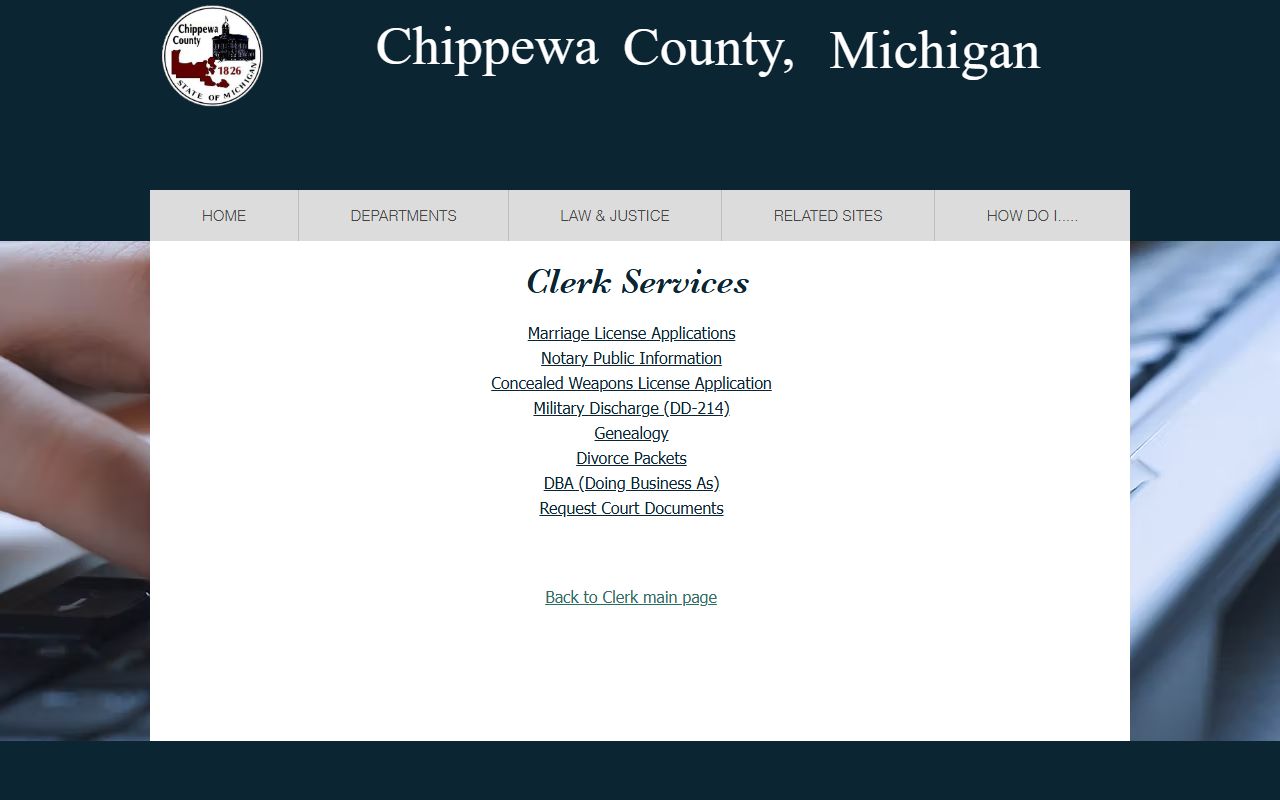
Because the list is long, it helps to see the main duties grouped together. The clerk of the Chippewa County court also wears several board hats at the same time.
- Keeps birth, death, and marriage records, plus assumed names and co-partnerships
- Files and stores 50th Circuit Court criminal, civil, and family case records
- Processes concealed weapons licenses, notary bonds, and veteran peddler permits
- Maintains military discharge papers under restricted-access rules
- Serves as clerk of the board of commissioners, canvassers, jury board, and gun board
Note: The district court and the register of deeds are separate offices, so land records and lower-court searches do not run through the clerk's counter.
Chippewa County Court Record Request Fields
Circuit court copies do not come from a browsing screen. They come from a written request that names the exact file. The clerk keeps the criminal and civil files for the 50th Circuit Court, and most of those files are open to the public. To pull one, the office needs enough detail to find it fast. The core inputs are a file number and the name on the file. The request also asks what kind of document you want and how you are connected to the case.
The county's request court documents page and its linked form spell out each field. Those same records also live behind the broader Chippewa County circuit court process, so the file number is the key that ties both together.
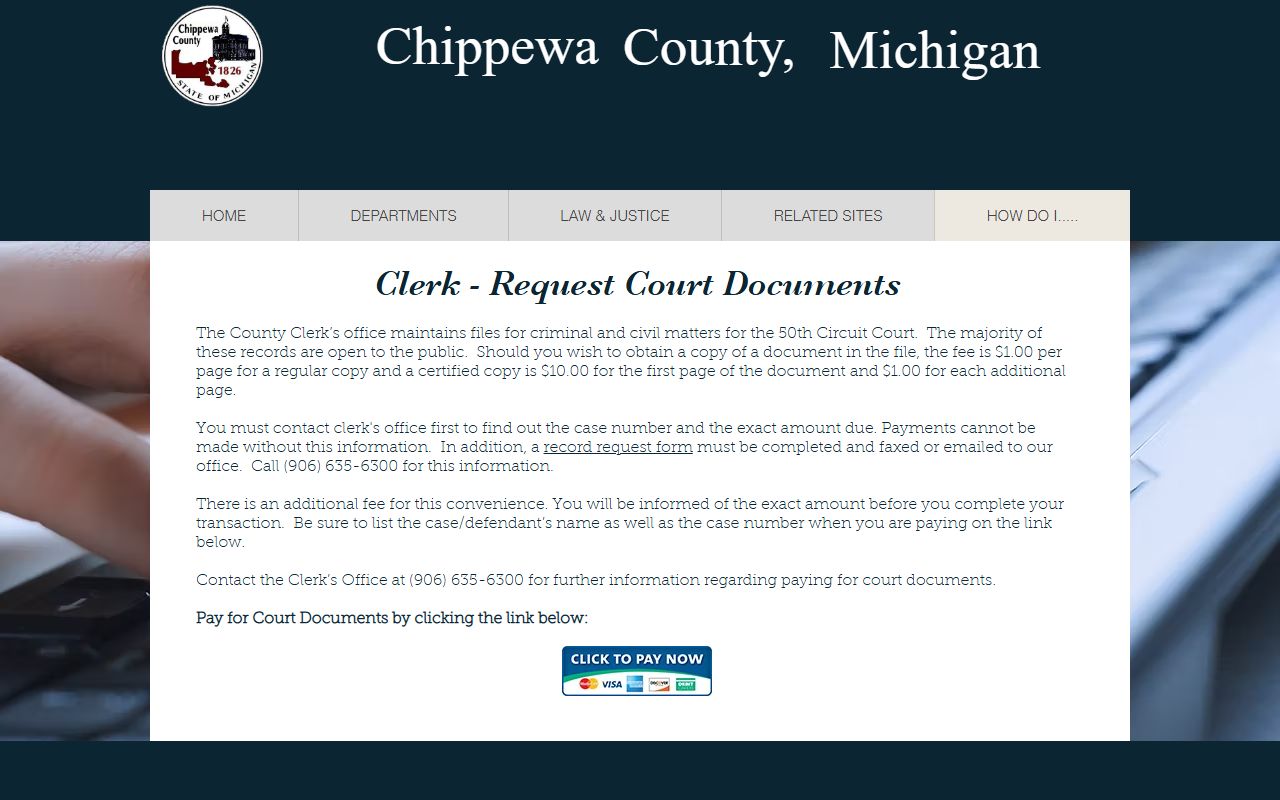
The table below breaks down what the court-document request asks for and whether each field is required.
| Field | Required | Notes |
|---|---|---|
| File Number | Yes | The clerk uses this to locate the exact circuit court file. |
| Name on File | Yes | Party name as it appears in the case caption. |
| Case Type | Yes | Mark whether the file is civil or criminal. |
| Document Type | Yes | Name the paper you need, such as a judgment or order. |
| Copy Type | Yes | Choose a plain copy or a certified copy. |
| Requester Identity | Yes | State whether you are a party or another interested person. |
How to Request a Certified Copy
A certified copy is more than a photocopy. It carries the clerk's stamp and proves the paper matches the official file. Courts, lenders, and agencies often ask for a certified version, not a plain print. For Chippewa County court records, the steps are short once you have the file details in hand. The Chippewa County clerk handles each certified request the same careful way.
- Find the file number and the name on the case. If you lack the number, call the clerk with the party name and rough date.
- Download the court record request form from the clerk's page, or pick one up at the counter.
- Mark the document you want, choose the certified copy option, and state your relationship to the case.
- Submit the form with payment in person, by mail, by fax, or by email, following the office instructions.
- Collect the certified copy at the counter, or wait for it to arrive by return mail.
Note: Certified vital records follow a separate eligibility check, so a court file copy and a certified birth certificate never use the same request path.
Chippewa County Clerk Copy Fees
Fees depend on the record and on whether you want it certified. Court copies use one schedule. Vital records use another. The clerk posts these prices so requesters can send the right payment the first time. Plain circuit court copies run one dollar a page. A certified court copy costs ten dollars for the first page and one dollar for each page after that.
Vital records price differently. A certified birth, death, or marriage record is ten dollars for the first copy and five dollars for each extra copy of the same record. The register of deeds charges its own recording and copy fees, which are not court copy fees, so keep those separate.
| Item | Amount |
|---|---|
| Plain court copy per page | $1.00 |
| Certified court copy, first page | $10.00 |
| Certified court copy, each added page | $1.00 |
| Certified birth or death copy, first | $10.00 |
| Certified marriage copy, first | $10.00 |
| Each added copy of the same vital record | $5.00 |
Chippewa County Vital Records Access
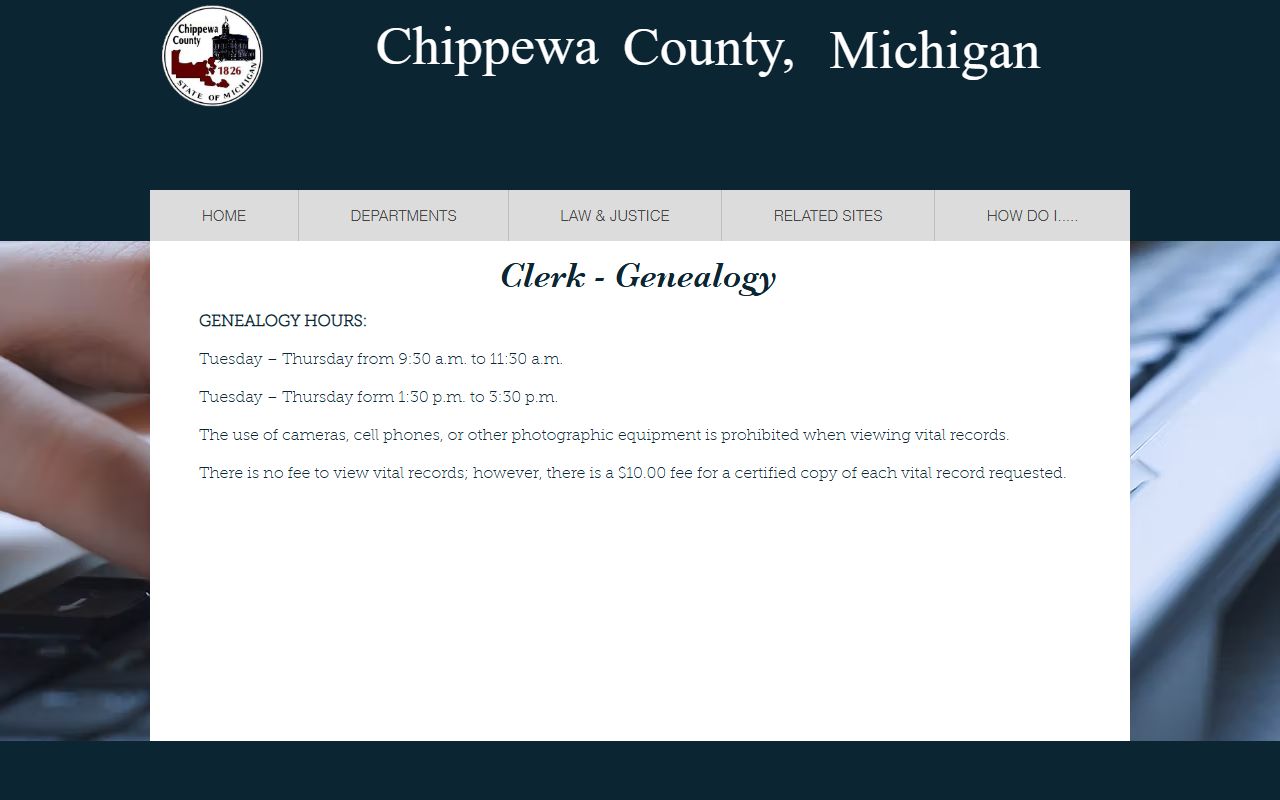
The Chippewa County clerk is the vital-record desk for the county. Not every record is equally open. The marriage index is public and runs from 1827 to the present, and no ID is needed just to look. The death index is open too, covering 1869 forward. Birth records are the strict exception. They are sealed, so only the person named, a parent, an heir, a legal guardian, or a legal representative may get a certified copy. Eligible birth copies are mailed only to the address on the applicant's ID.
Genealogy visits use a tight schedule, Tuesday through Thursday, in two short blocks. The county's clerk genealogy page explains the hours and what staff can pull for family research.
Divorce files are not clerk vital records. They are court files, so a divorce copy runs through the court-record request form, the same channel used for other Chippewa County marriage and divorce records. Keeping that split clear prevents a lot of confusion at the counter.
Chippewa County Military Discharge Records
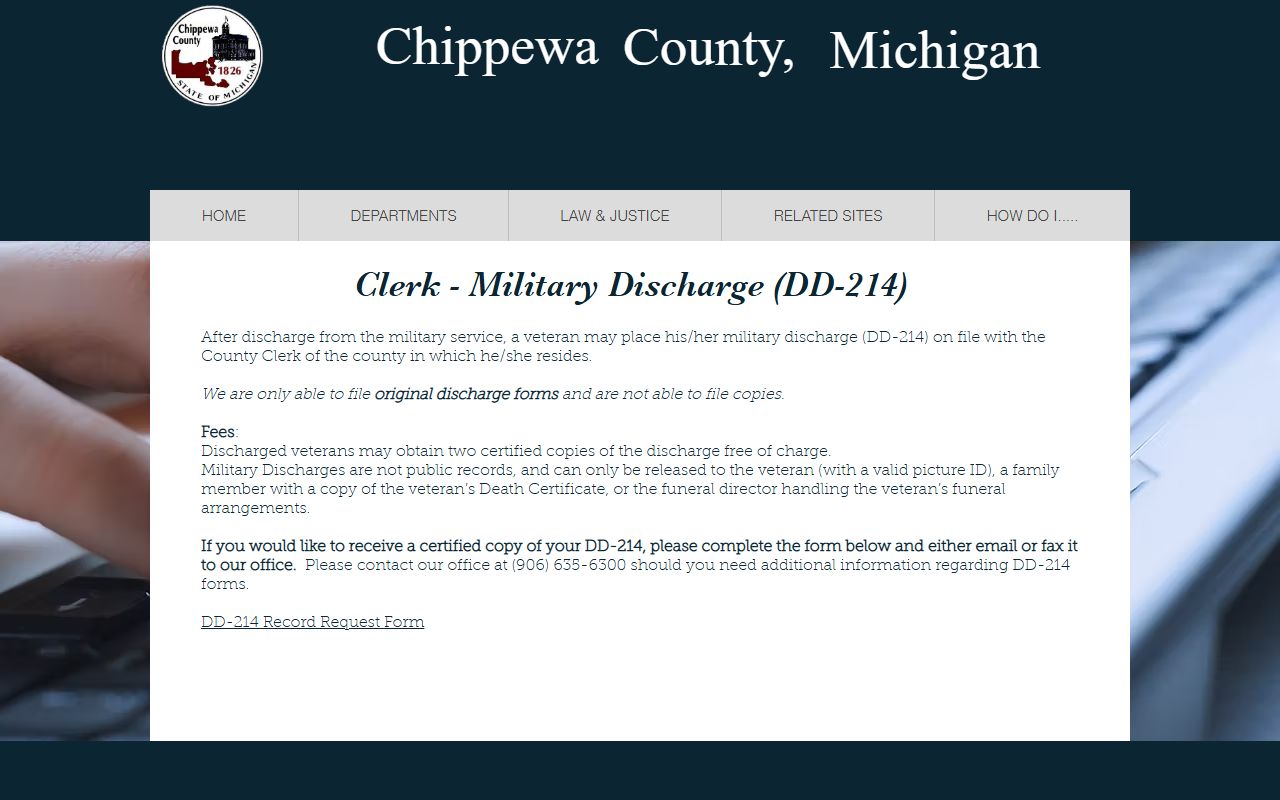
The clerk stores veterans' discharge papers, but a DD-214 is not a public record. The county limits who can receive a copy, and the rule is firm. The document can go only to the veteran with valid ID, to a family member who brings the veteran's death certificate, or to the funeral director handling arrangements. Anyone outside that circle will be turned away, which protects the veteran's sensitive service data.
The county's military discharge page states the release rules and the proof each requester must show.
Because the paper is restricted, bring the right ID or the death certificate before you visit. A wasted trip is common when a requester does not fit one of the three eligible groups.
Other Chippewa County Clerk Services
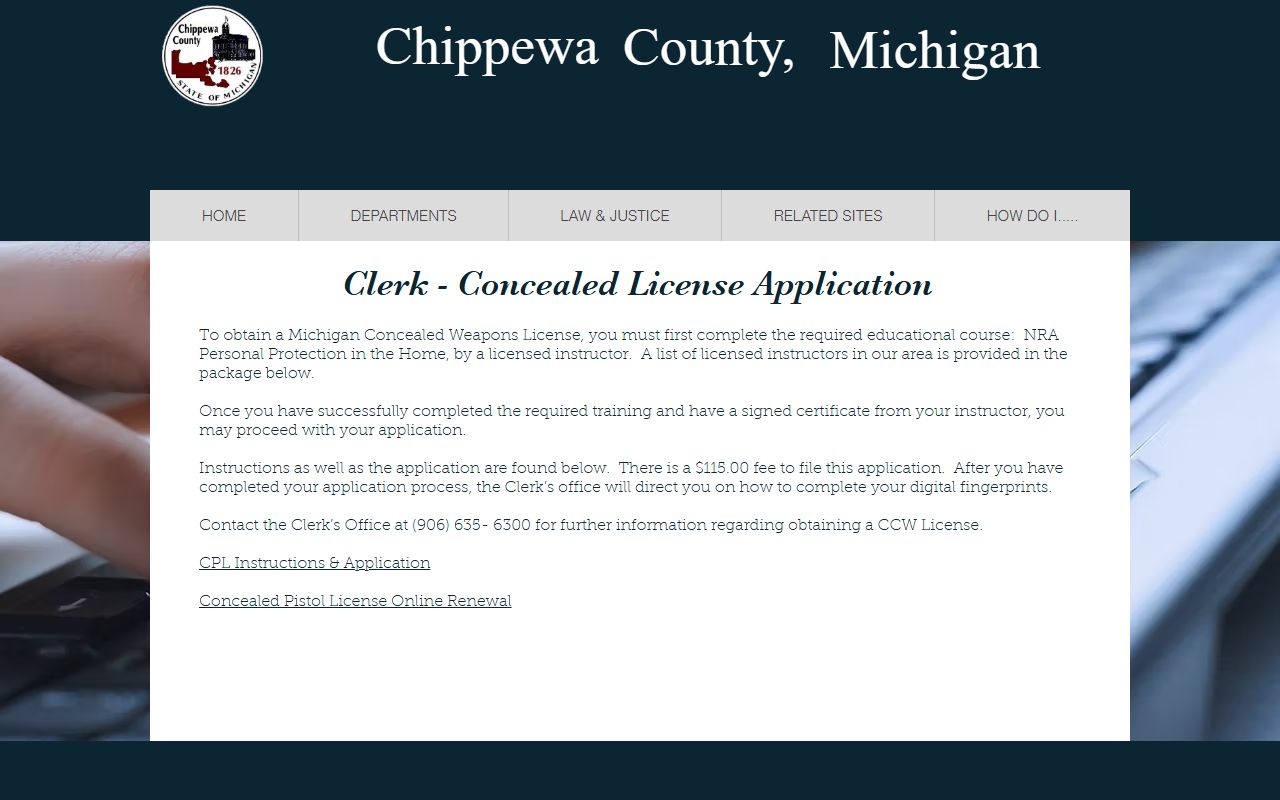
Beyond records, the clerk runs several license and permit tasks for Chippewa County residents. Concealed weapons license applications are handled here. So are notary bonds and veteran peddler permits. The office also files assumed names and co-partnership papers for people starting a business under a different name. These services show why the clerk is treated as the county's general public-service window.
The county's concealed weapons license application page lists what an applicant must bring and how the review works.
Several requests can start online or by form, yet many still finish at the counter, by mail, or by fax. The quick reference below sorts the most common non-court services and where each one begins.
- Concealed weapons license
- Apply through the clerk with required ID and supporting documents.
- Notary public bond
- File the bond with the clerk before the commission takes effect.
- Assumed name or co-partnership
- Register a business name or partnership on file with the county.
- Veteran peddler permit
- Qualifying veterans obtain the permit through the clerk's office.
Note: The clerk cannot give legal advice, so questions about which form fits your situation may need a lawyer or the relevant court.